An Ongoing Investigation into Structure, Relationship and Emergence
The Harmonic Architecture Series forms the foundational body of work within the SNRGY.art practice.
Each Harmonic Configuration is developed through the Visual Resonance Method, bringing together geometry, colour harmonics, crystalline materials and layered composition to investigate how carefully organised visual relationships may contribute to a coherent artistic whole.
Rather than presenting isolated artworks, the series documents a growing collection of creative investigations. Every configuration explores a distinct harmonic question, while remaining connected to a broader taxonomy preserved throughout the Harmonic Codex.
As the archive continues to evolve, each new configuration contributes another chapter to an expanding body of artistic research—one that values observation, craftsmanship and thoughtful documentation as highly as the finished object itself.
Visitors are invited to explore not only the individual works, but also the relationships that connect them through shared geometries, material studies, structural forms and recurring themes.
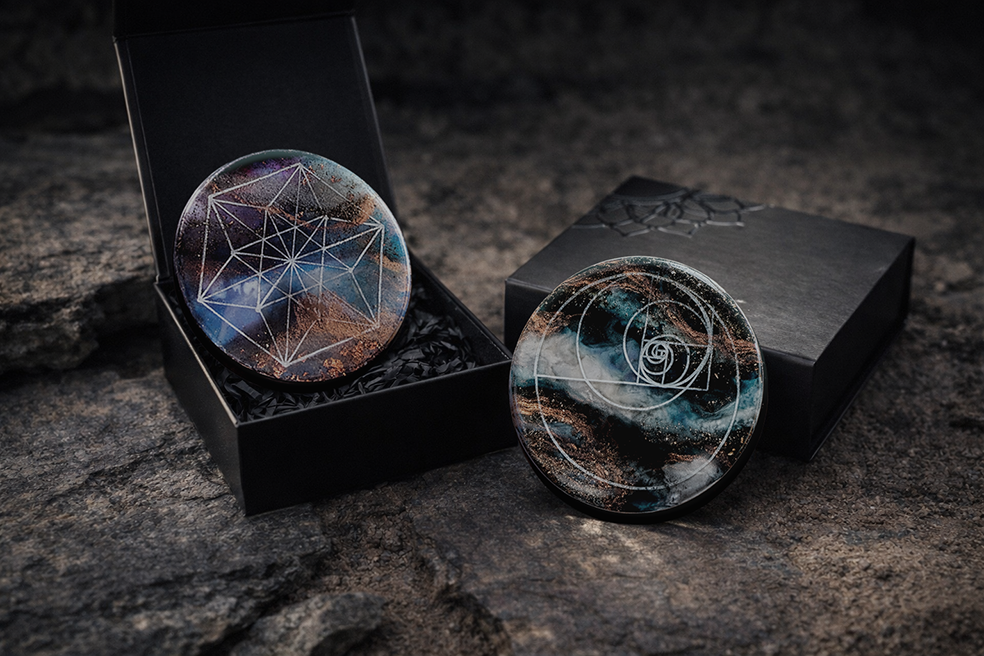
Every piece represents a unique chapter within the continuing evolution of the Visual Resonance Method.
Structural Forms
Different Ways of Exploring Harmonic Relationships
The Harmonic Architecture Series is organised through a number of recurring Structural Forms, each representing a distinct approach to investigating harmonic relationships within the SNRGY.art practice.
Rather than describing style or appearance, Structural Forms define how one or more Harmonic Configurations relate to one another. Some investigations are expressed through a single self-contained configuration, while others unfold through complementary pairs, directional relationships or multi-part studies.
Each Structural Form provides its own framework for exploration, allowing geometry, colour harmonics, crystalline materials and composition to be organised in different ways while remaining grounded within the Visual Resonance Method.
Together, these forms create a flexible research architecture that supports both individual works and the continuing evolution of the Harmonic Codex.
Emergent Design
Every Harmonic Configuration documents a unique investigation.
The Structural Form chosen for that investigation influences how its emergent qualities are explored.
A Stand Alone Configuration may focus on a singular harmonic relationship, while a Dual Loop investigates reciprocal dialogue between two complementary configurations. Transmission / Reception explores directional organisation, and Shadow Work Trilogies examine transformation through sequential progression.
No Structural Form is considered more significant than another. Each offers a different perspective through which harmony, organisation and relationship may be investigated and documented.
As the archive continues to expand, additional Structural Forms may emerge, reflecting the evolving nature of the creative practice.
Archive Principle
Every Harmonic Configuration documents a unique investigation. Every Structural Form offers a different way of exploring relationship.
Together they form the evolving architecture of the Harmonic Codex.

Stand Alone Discs

Dual Loop Pairs
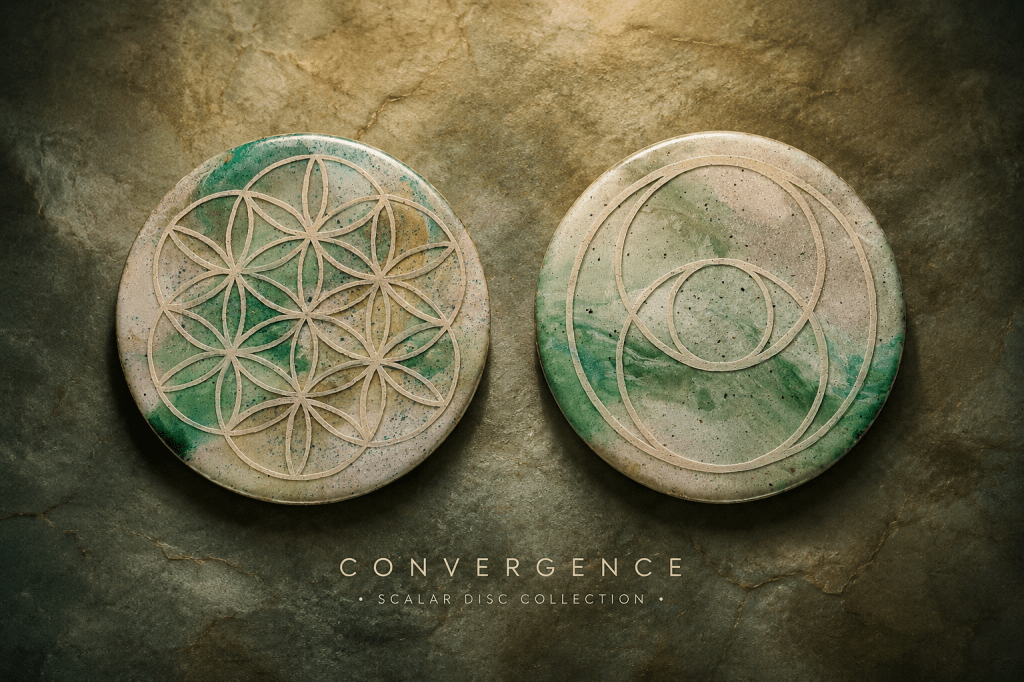
Transmitter Receiver Pairs
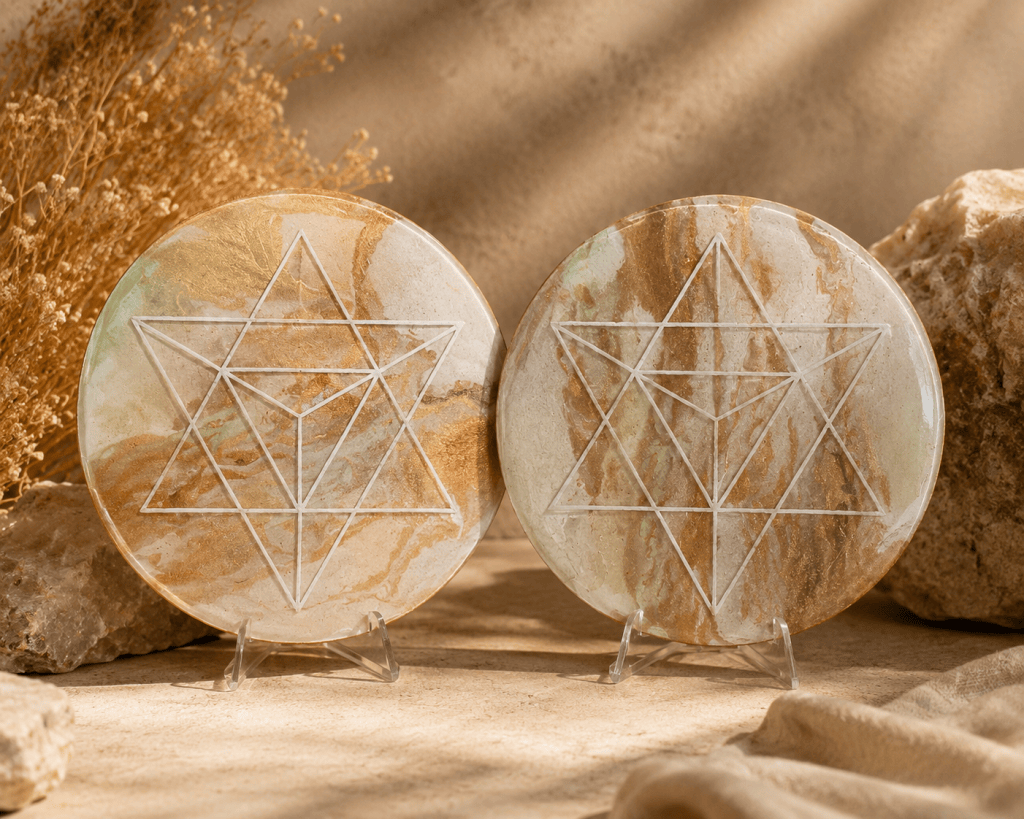
Paired Origin Architecture
Explore the Emergent Function Segments
Every artwork within the SNRGY.art collection expresses one or more Emergent Function Segments—recurring themes that explore different qualities of human experience through geometry, colour harmonics, material selection, and symbolic form.
Each segment is represented by an archetype, offering a unique perspective on qualities such as grounding, creativity, clarity, courage, harmony, protection, growth, and transformation. Rather than defining who we are, these archetypes provide a language for exploring the qualities we may wish to cultivate or better understand.
Whether you begin with a particular artwork or a particular archetype, every pathway leads deeper into the same interconnected framework.
Explore the Emergent Function Segments →